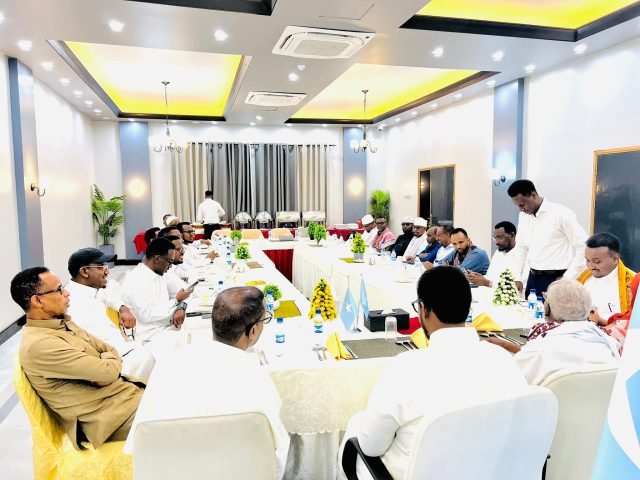
Somalia’s National Electoral Commission (NEC) launched a training program for election staff in the town of Afgooye on Monday, preparing for the country’s first direct one-person-one-vote parliamentary and presidential polls in decades.
The training marks a critical step away from Somalia’s decades-old indirect clan-based selection system, where special delegates chose lawmakers and the president. Direct universal suffrage is seen as a cornerstone of the government’s push for political stability and legitimacy, though insecurity and logistical hurdles remain formidable.
More than 200 polling officers and supervisors are taking part in the week-long workshop in Afgooye, a town in the Lower Shabelle region. The sessions cover voter registration, ballot handling, security protocols, and conflict resolution at polling stations.
“This training ensures that our staff are ready to administer free and fair elections that reflect the will of every Somali citizen,” a senior NEC official told reporters. “We are building a professional team that can operate transparently under challenging conditions.”
The commission plans to replicate the training across other regions in the coming months, targeting over 10,000 temporary election workers nationwide. Observers note that successful implementation depends heavily on cooperation from local security forces and clan elders.
One resident of Afgooye expressed cautious optimism, saying that many people are excited to vote directly for the first time but worry about delays or violence. Analysts warn that Al-Shabaab militants control rural swathes of the south and have previously disrupted political processes.
International partners, including the UN and African Union, have pledged technical and financial support for the electoral roadmap. No official date for the national vote has been set, but the NEC aims to complete staff training by the end of the year.